
It Doesn't Matter
What does it mean to hate?

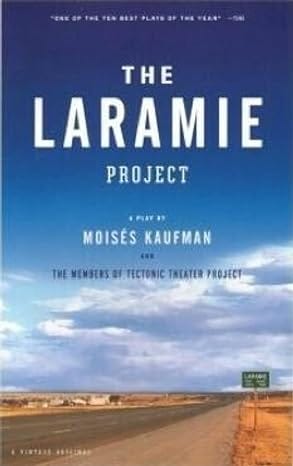
This week in Texas one of our neighboring public school districts, Keller ISD, canceled a high school theater production of The Laramie Project, the documentary-style play chronicling reactions to the 1998 murder of University of Wyoming student Matthew Shepard in Laramie, Wyoming.
I don’t usually dignify book banning, play-banning, or censoring art under any circumstance with a response, and in fact, I make it seem odd that someone would want to keep another person from reading, or consuming knowledge. But this seems to demand what no one has the time for—introspection and understanding.
When we talk about hate we must talk about dignity. When we hate the actions of another human, are we then permitted to diminish the person in their humanity? Do we hesitate when someone we don’t understand, or fear, is injured? Why does it feel slightly less tragic when we can separate the victim from our realm of acceptance?
What does it mean to hate? Is it an action toward the target of our anger or have we made it more passive? It is easy to gloss over the stories that slow us down and demand more care when we don’t sympathize with the victim.
The Laramie Project is, ironically, a great example of why this is all so overblown. The 2000 play is “verbatim” theater, scripted from hundreds of interviews conducted by the theater company, New York’s Tectonic Theater Project, with inhabitants of the town, and published news reports. Eight actors portray more than sixty characters in a series of short scenes adapted from the interviews.
Matthew Shepard was beaten to death by two men and left tied to a barbed wire fence in Wyoming. Shepard’s murder was instrumental in advancing hate-crime legislation because Shepard was gay. Shepard’s murder was ruled a hate crime after his attackers were confirmed to have expressed anti-gay sentiments. Quite simply, Shepard was targeted and murdered for being gay.
Was the decision to cancel this play prompted by the fact that the details are violent, brutal, unimaginable, and distressing—perhaps too much for high schoolers to understand? Or was the decision to cancel the play made because the victim was not straight, therefore portraying something that could be deemed controversial?; after all, not everyone thinks it is ok to be gay.
Keller theater students created an online petition compelling the school district to allow the play to proceed as planned, stating, “According to a 2019 report by the FBI, Texas ranks third in the nation for hate crimes (source: FBI Hate Crime Statistics). It's essential that our education system works towards creating awareness about these issues rather than shying away from them.”
There is nothing controversial about The Laramie Project. If we are to value accurate reporting and be perpetual seekers of the truth, then we have to record our history, and examine it within the context of its place in social and cultural development. The play’s creator, Tectonic Theater Project founding artistic director Moisés Kaufman spoke out against the recent decision by Keller ISD Board of Trustees, in a statement, “When the administration of the Timber Creek High School cancels a production of The Laramie Project, it’s telling the LGBTQ students that their stories are unwelcome, that they should refrain from speaking their truth and that that community is not willing to listen,” Kaufman said in the statement. “This is a terrible thing to do to any minority.
Many newspapers, websites, and TV media covered Shepard’s death at the time as they tend to cover all tragedies: the facts, but with a splash of fanfare and a hint of bias, regardless of its direction. The Laramie Project, however, is an example of quite the opposite: verbatim documentary theater, presented as it occurred. This “devised” theater is based on the real transcript of what was said. There is no bias, no artistic interpretation.
There is nothing more alarming about this play than any of the media reporting at the time or since, other than the fact that it is gruesome and bleak; but I can’t help but wonder when we consider the stories we tell, we are leaving out those that we find uncomfortable, or whose victims’ actions we condemn. Do we softly justify tragedies when they happen to those we consider to be different from us?
An opinion on homosexuality is not necessary when considering Matthew Shepard’s death—if we are to consider that his humanity and dignity were diminished by people so full of hate. A hate crime does not require an opinion to understand. It only requires us to acknowledge the presence of hate.
The problem here is that many times when a work of art features gay people, there becomes an impetus to make a statement cautioning those who may consider the main character—a man beaten to death—sinful, and therefore potentially offensive to their beliefs. The beauty of documentary-style theater, such as The Laramie Project, is that there is no need to make a statement; the words of those who experienced this incident stand for themselves. It’s up to the audience to process what they have witnessed.
So why is that controversial? Is it wrong to acknowledge the existence of a gay man, specifically when that man was murdered for being gay? Are we afraid of introducing the idea of hate to young people? No, I don’t think we are, I think we teach our children to hate in millions of other, insignificant ways. Matthew Shepard’s murder reported verbatim, should not scare anyone because the main character is gay. It should scare us to consider what happens when we don’t try to understand each other and when we don’t try to name our fear before it becomes hate.
Last week, a young teen in Oklahoma died after they were severely beaten at school. The cause of death is still under investigation, but The U.S. Department of Education has opened an investigation into the Oklahoma school district where Nex Benedict died. Benedict reported to police at the hospital that they had been bullied before this incident.
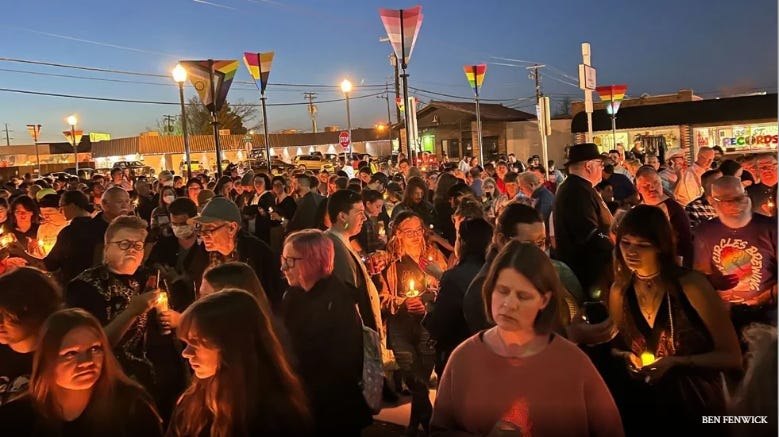
The department said it was investigating whether Owasso Public Schools, outside Tulsa, had “failed to appropriately respond to alleged harassment of students” in violation of federal law, including Title IX.
This story is not controversial because the teen who was murdered was transgender. The story is controversial because it illuminates what our hate can do; what roots grow from our sneers, our dismissive mocking scoffs, barely held under breath. The story is controversial because some people don’t think it is ok to be gay, and if we consider our victim to be less than sympathetic, it makes understanding the story more complicated. Benedict’s gender or sexual orientation doesn’t matter here; in reporting this story the facts are just as simple as they were in Shepard’s case: this person was beaten until they died by people who hated them.
Did Matthew deserve to die because he didn’t live how a group of strangers wanted him to live? That has nothing to do with this story. We are asking the wrong questions; we are qualifying the actions of murderers. There is no barometer for human dignity and respect. Fear does not get to override tolerance.
What authority do we have over each other to such an extent that we can diminish their humanity, or label them as “other.” Does it soften the blow to hear that someone who was tortured, and taken from this earth before their time, made choices we don’t like? No, that has nothing to do with this story.
Did Nex deserve to die because they were trans? That has nothing to do with this story. There is no way to measure the damage we do to the living, growing brains of our children when we demonstrate intolerance and disgust as adults. It is unfair to heap such responsibility onto their small hands, their big dreams.
Matthew was someone’s child. He was loved, just as I love my children.
Nex was someone’s child. They were loved, just as you love your children.
It is not controversial to report on the consequences of fear when so many of us have been screaming into the void that hate begets hate. Human life is not measured by our comfort or understanding.
Does anyone deserve to die? I don’t think so, even though our laws that demand justice through the death penalty say that I’m wrong. Does any human deserve to die trembling at the hands of their peers simply for existing? Are we allowed to see our wrath through to its most destructive end?
When we consider being gay controversial, we make room for hate to grow. This is true. It is not my opinion that when I teach a child to diminish another human being because of my beliefs, I am planting the early seeds of hate. We won’t see the product of that hate for years to come, but they carry it with them. In their little hands, and their big dreams.
Nex was someone’s child with small hands and big dreams. They cried the same way all children cry; when they are hurt, when they are alone, and when they call out for us it is their most primal right to be held in dignity and esteem by the adults who surround them.
Matthew and Nex did not deserve to die because we are afraid of what we do not understand. It is our duty now, as the adults, the caregivers who hold these precious people in our greatest esteem and care before it is too late. Not because we suddenly understand them, but because it is the right thing to do.
Every one of us only has this life. And the greatest controversy of all is that we have, as human beings, evolved to justify the destruction of one another, to qualify what it means to be truly alive, and to police the stories that demonstrate the consequences of our misunderstanding.
Here is the truth: a world-altering pandemic has warped our children; global war, division and violence, genocide, and constant death haunt their growing minds. We must protect them from the lesser angels of our nature and model tolerance at its most basic level. We have to believe in the deepest parts of our hearts that there is hope. We must live and breathe for the light that carries us forward; love is no longer a luxury, it is imperative to our survival.
It does not matter who we are, what we believe, or how we exist. We all deserve a chance at this life.